
Amplification for architectural loudspeakers
The amplifier for speakers you were never meant to see
Four channels, 500 W of shareable power and a half-rack chassis — set up from a phone, in a browser, over the amplifier's own Wi-Fi. Nothing to install, and nothing added to the client's network.
The unit

Four channels of UMAC™ Class D in a half-rack 1U chassis, with low-impedance and 70/100 V outputs from the same box and no external transformer between them.
Most amplifiers in this category are built to drive anything. This one was built alongside the speakers it drives — which is a different design brief, and it shows up in the places integrators actually feel it: how it is commissioned, how power is shared across a floor, and how little of it there is to find room for.
Five circuits, always on
Short circuit, DC, undervoltage, temperature and overload — with Status, Input, Output, Network and WiFi reported on the front panel.
The same 500 W, divided how the building needs it
Channels 1 and 2 share a 250 W budget, and so do channels 3 and 4. Whatever one channel in a pair isn't using is available to the other.
So the published figures — 4 × 125 W and 2 × 250 W — are not two different amplifiers or two different modes. They are the same 500 W split evenly and split hard, and everything in between is available too.
None of that is a setting. The amplifier does it by itself: when one channel briefly asks for more than its continuous rating and its partner is asking for less, the spare power is handed across automatically.
Move either split to see it redistribute.
The amplifier is the access point
The SD125.4 has a wireless access point built into it. The installer joins the amplifier's own Wi-Fi, opens a browser, and configures inputs, zones and outputs in the amplifier's own web app — no software to install, no separate adapter, and no waiting for the building's network to exist first.
That last part matters more than it sounds. A rack can be configured the day it is racked, rather than the day IT finally turns up, and when you leave there is nothing of ours sitting on the client's infrastructure.
A browser is the whole toolchain
The amplifier hosts its own access point and its own web app. Any phone or laptop with a browser can commission it — nothing to download, nothing to license.
Off the client's network
You connect to the amplifier, not through the building. Commissioning does not wait on anyone else's infrastructure, and it does not touch it.
An invisible speaker deserves an invisible amplifier
A Nakymatone speaker is plastered into the wall and disappears. Then the amplifier turns up: a full-width box wanting a rack, a laptop and an afternoon. That is the wrong end of the same idea.
The SD125.4 is half a rack wide, weighs 2.8 kg and is commissioned from a phone. It is built to drive the four loudspeaker brands below — each of which solves the same problem a different way.
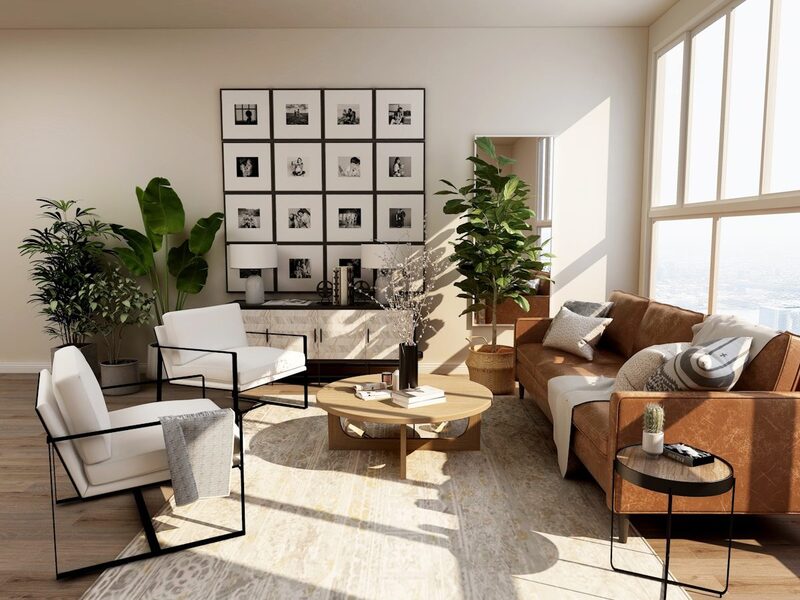 Invisible
Nakymatone
Speakers plastered into the wall and the ceiling. Nothing to mount, nothing to grille, nothing left in the room to look at.
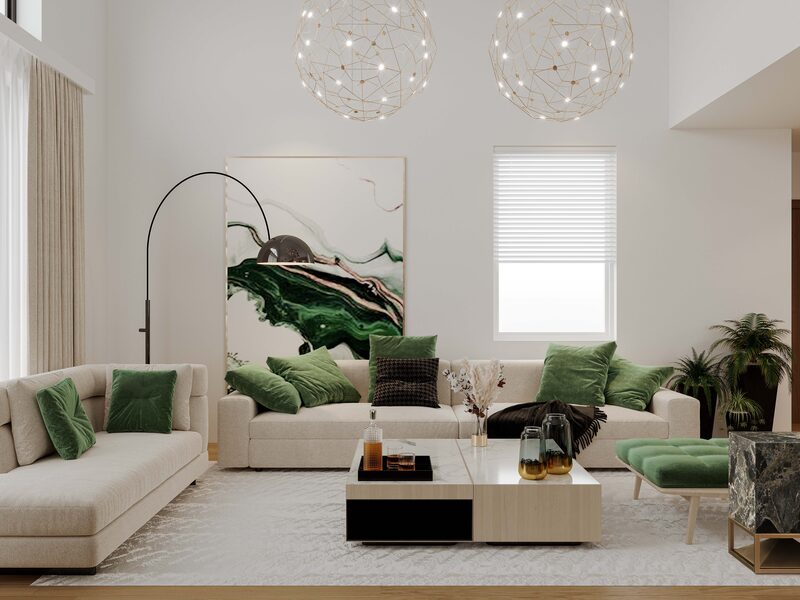 Sculptural
Architettura Sonora
Stone, marble, concrete and terracotta, made by hand in Italy. The speaker stops hiding and becomes an object in the landscape.
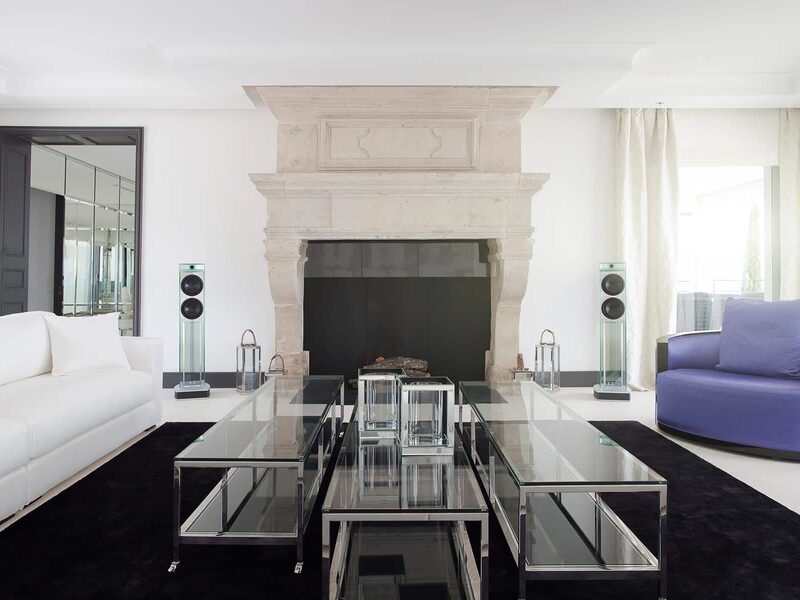 Transparent
Waterfall Audio
Glass-cabinet loudspeakers built in France. The enclosure is still there — you can simply see straight through it.
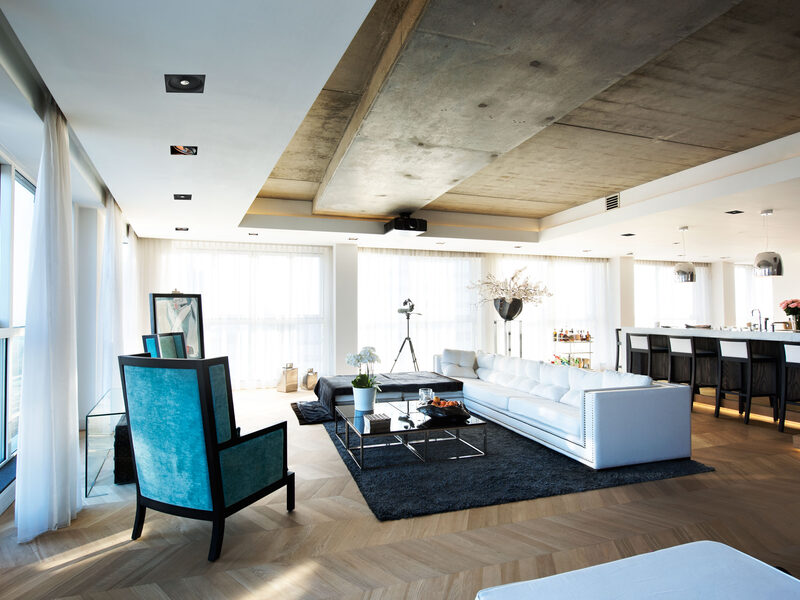 Architectural
Gray Sound
Dutch custom-install speakers with wide dispersion, built for the areas nobody sits still in — and to finish flush with the architecture.
Where it goes
Four low-impedance zones wired straight to the speakers, or two constant-voltage runs each feeding a chain of tapped ones — from the same chassis, without a transformer between them.
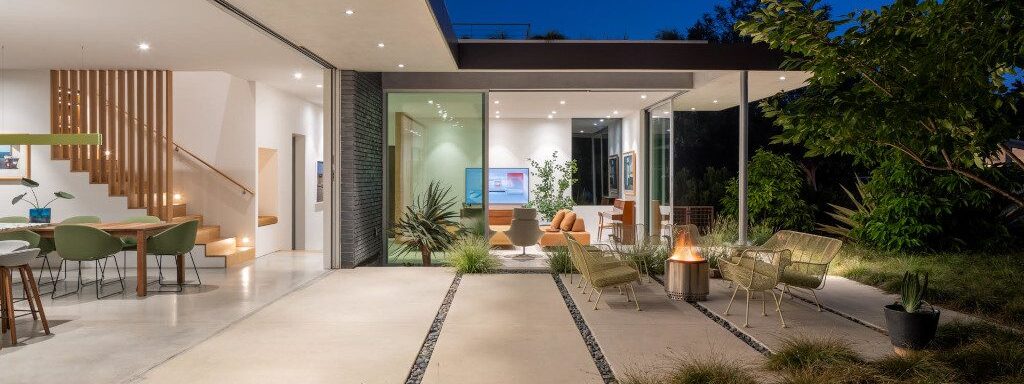
Low impedance
Four zones, one residence · 4 Ω / 8 Ω
Living room Nakymatone invisible
2 speakers · 8 Ω
Kitchen Nakymatone invisible
2 speakers · 8 Ω
Listening room Waterfall Audio glass
2 speakers · 4 Ω
Courtyard Architettura Sonora
4 speakers · 8 Ω
70 / 100 V line
Two runs, one venue · constant voltage
Main floor Gray Sound
10 speakers · 20 W taps · 200 W of 250 W
Terrace Architettura Sonora
6 speakers · 30 W taps · 180 W of 250 W
Specification
| Channels | 4 × Lo-Z / 2 × Hi-Z |
|---|---|
| Output power @ 4 Ω/8 Ω | 4 × 125 W |
| Output power @ 70V/100V | 2 × 250 W |
| Total system power | 500 W |
| Output circuitry | UMAC™ Class D |
| Signal-to-noise ratio | > 106 dB (A-weighted) |
|---|---|
| THD+N (typical) | < 0.05% |
| Standby consumption | < 0.6 W |
| Dimensions | 44 × 220 × 319 mm — half-rack 1U |
| Operating voltage | 100–240 V, 50–60 Hz |
100V line mode operates @ −1 dB (≈ 90 V).
Specifying one?
Selective Amplifiers are sold through custom-installation dealers and specifiers. Tell us about the project — zones, speaker types, and whether the runs are low impedance or 100 V — and we will point you at the right configuration and the right supplier.
Trade enquiries are answered within one business day.